Showing posts with label COVID-19. Show all posts

Monday, June 7, 2021

TB, HIV, Malaria and COVID-19 Must Not Win!

We are part of the teams that are committed to end HIV, TB, Malaria and COVID-19.

Join our efforts please.

Sunday, May 31, 2020

COVID-19, Smoking, Drinking and the Anti-TB Champion

COVID-19, Smoking, Drinking and the Anti-TB Champion

Theme: Do Not Smoke; Do Not Drink

We cannot allow smoking if we also want to live a TB-free life. But, then COVID-19 is threatening the life of those with immune-compromised conditions and TB as well.
So, we have to take TB prevention personal and institutional.  Stay safe. Be secure.

The communities must engage in critical prevention activities to significantly reduce instance of COVID-19 transmission during the COVID-19 pandemic/lockdown.

The health facilities have significantly reduced TB services during the COVID-19 pandemic/lockdown.

The communities must provide all non-stigmatising opportunities and contexts TB-medication taking as well as to significantly reduce instances of COVID-19 transmission during the COVID-19 pandemic/lockdown.

The number of people attending health facilities for TB testing and treatment has decreased significantly during the COVID-19 pandemic/lockdown.

 TB medication taking at a personal level must be rigorous so that it reduces on number of routes to the clinic for check-ups, reduces vulnerable to drug-resistance or COVID-19 infection during the COVID-19 pandemic/lockdown.

The capacity to provide TB diagnostic services (e.g. smear microscopy, GeneXpert, culture and counselling) has decreased significantly during the COVID-19 pandemic/lockdown.

Local communities must be empowered to take care of people with TB.

Overall the capacity for health facilities to provide care and follow-up to people with TB has decreased significantly during the COVID-19 pandemic/lockdown.

People with TB can successfully continue their treatment at home when given TB medicine to cover more months during the COVID-19 pandemic/lockdown.

Most of the resources for TB in-patients (e.g. isolation wards, beds) are being repurposed and used for COVID-19 patients. Also health facilities have experienced a significant increase in stock-outs and/or delays in the delivery or pick-up of TB medicines during the COVID-19 pandemic/lockdown.

It is better to stay home, follow the MoH guidelines, sanitize, don’t drink and do not smoke so that you reduce vulnerability to COVID-19. If we don’t many people may be infected and this will overwhelm the health facilities.

With the likelihood that COVID-19 pandemic is raging; health facilities will run out or lack personal protective equipment (PPE) (e.g. masks) to safely care for both TB and COVID-19 patients.


Friday, May 22, 2020

COVID-19 and the International Day To End Obstetric Fistula

COVID-19 and the International Day To End Obstetric Fistula

The first day I accompanied a young woman with Fistula complications to a hospital 100 miles away from her home, is the day I embraced feminism fully. I would say fully, because up until then I was doing what many others were doing: social justice and rights activism, explaining, affirming womanhood and ensuring safe motherhood.

But when I sat next to a woman who had uncontrollable flatulence, whose urine and feaces were let loose every time the car hit a pothole, I was baptized. I did not become a feminist to add extra accolades to my resume. I became one to heal women in rural Africa. Most especially, I was interested in Fistula correction surgery. Fistula is real and it can be the cause of trauma, isolation and self-hate by those who suffer from it.

We sat next to each other but I noticed she was uncomfortable. I assured her that it was okay to pass the wind, to pee in her pampers and that we shall have her cleaned. I said to her that everything will be okay after the corrective surgery. She was booked for corrective surgery and later she was trained as a Fistula Correction Peer educator. Right now she is a mother of three children.


We went to Kitovu Regional Referral Hospital, a private, non-profit, community hospital owned by the Roman Catholic Diocese of Masaka and is accredited by the Uganda Catholic Medical Bureau. The hospital has a comprehensive community based primary healthcare programme, including a Fistula Correction ward, Baby Uunit, an HIV/AIDS treatment center. Other specialized units include a regional blood bank, a neonatal care unit, a nutritional rehabilitation unit and a school for laboratory assistants. The hospital also serves as an Internship Hospital in collaboration with Makerere University School of Medicine.


What we term as Fistula is actually Vesico-Vaginal-Fistula (VVF). According to the Kitovu Regional Referral Hospital website, “VVF is a result of prolonged obstructed labour. In 99% of cases the baby will die, and because of the damage the baby’s head has caused during the labour to the tissues of the walls of the vagina, bladder and rectum, a fistula occurs and the mother is left incontinent of urine or stool or both. The women can also suffer from nerve damage and have disability in walking. VVF is commonly seen in developing countries because of poverty, malnutrition, distance from medical help and lack of knowledge. Women with VVF suffer greatly. They are often ostracized from society and have to deal with the physical and psychological problems of their condition. Often they do not know that there is help available to them and are too ashamed to ask. Because of this women sometimes live with this condition for many, many years. Kitovu Hospital has offered fistula repair services since 1993. Kitovu was the first place to hold training programs in obstetric fistula repair for Ugandan doctors and nurses. The training of local doctors started at Kitovu in November 2004. In April 2005 the St. Annes Obstetric Fistula Unit was officially opened and the Ministry of Health in Uganda has given it special recognition as the first training centre of its kind in Uganda.”

There are different types but one called obstetric fistula is the most common.

According to UNFPA, “obstetric fistula is one of the most serious and tragic childbirth injuries. A hole between the birth canal and bladder and/or rectum, it is caused by prolonged, obstructed labour without access to timely, high-quality medical treatment. It leaves women leaking urine, feaces or both, and often leads to chronic medical problems, depression, social isolation and deepening poverty. Hundreds of thousands of women and girls in sub-Saharan Africa, Asia, the Arab States region, and Latin America and the Caribbean are estimated to be living with fistula, with new cases developing every year. Yet fistula is almost entirely preventable. Its persistence is a sign of global inequality and an indication that health and social systems are failing to protect the health and human rights of the poorest and most vulnerable women and girls.”

There are many ways you can support women to seek corrective surgery as well as reduce on the instances of fistula. These are five ways you can help:

1. Read widely about fistula so that this knowledge then empowers you to plan activities which in turn connect you to others who are doing similar campaigns
2. Create fistula support clubs in your area
3. Join fistula support organisations and contribute money to them
4. Make fistula correction one of your social justice activities or causes
5. Tell your friend about it and visit a fistula correction clinic near you.

When we are all conscious of what we can do to support health promotion we promote prevention, protection and quality life outcomes for women, children and eventually whole communities. Do something, don’t just sit idly.

Do not forget to wash those hands with soap, wear a mask fully, avoid unnecessary touches and restrict your movements. 


Saturday, May 16, 2020

Nature Network Team Pushes for End To TB, HIV, Malaria Integrating COVID-19

We are so thrilled to share with you,
the various short reports here.
We are still pushing for end to TB, HIV and Malaria even as COVID-19 is roaming large.
It takes community to beat TB.
It concerns all of us.
It is my business too.
We keep the promise to ensure that
we move together, invest more, invest better,
emphasize gender equality and ensure political leadership beyond health.
Let’s leave no one behind and remember our theme: Taking health in our hands.
It’s time to end TB
#COVID19loser

We are putting in hours!  Long hours to be good!  This is how good we do our "prep!"
We are about to present the first ever COVID-19 Loser Africa Campaign Hackathon!
We love you all.
Strategies👣Impact🚣Goals🏵️🌻
When we know the problem, we then look for solutions. When we know solutions, we then look for ways to apply them through appropriatisation. Appropriate activities are the strategies which have impact which then lead to our goals. It takes community to beat TB.
It concerns all of us.
It is my business too.
But, that does not stop us from self-care and grooming!


##########################################################################


Monday, April 20, 2020

Anti-TB Champion Profiles


Thematic Monday!
At the Nature Network we cannot wait to bring you an experience from over 400 Anti-TB Champions we hope to bring their perspectives on life, COVID-19, TB, HIV, Malaria and other aspects of wellness.
Stigma needs to be kicked out of our communities, living conditions need to be improved, universal health coverage must serve all. That way we can fight say, TB and eradicate it by 2030.
Meet a formidable Anti-TB Champion sharing a deep insight into what works in Africa if we ever want to eradicate TB.

Thursday, April 9, 2020

Family Based Therapy Model of Acceptance Integrating COVID-19 Response


What:

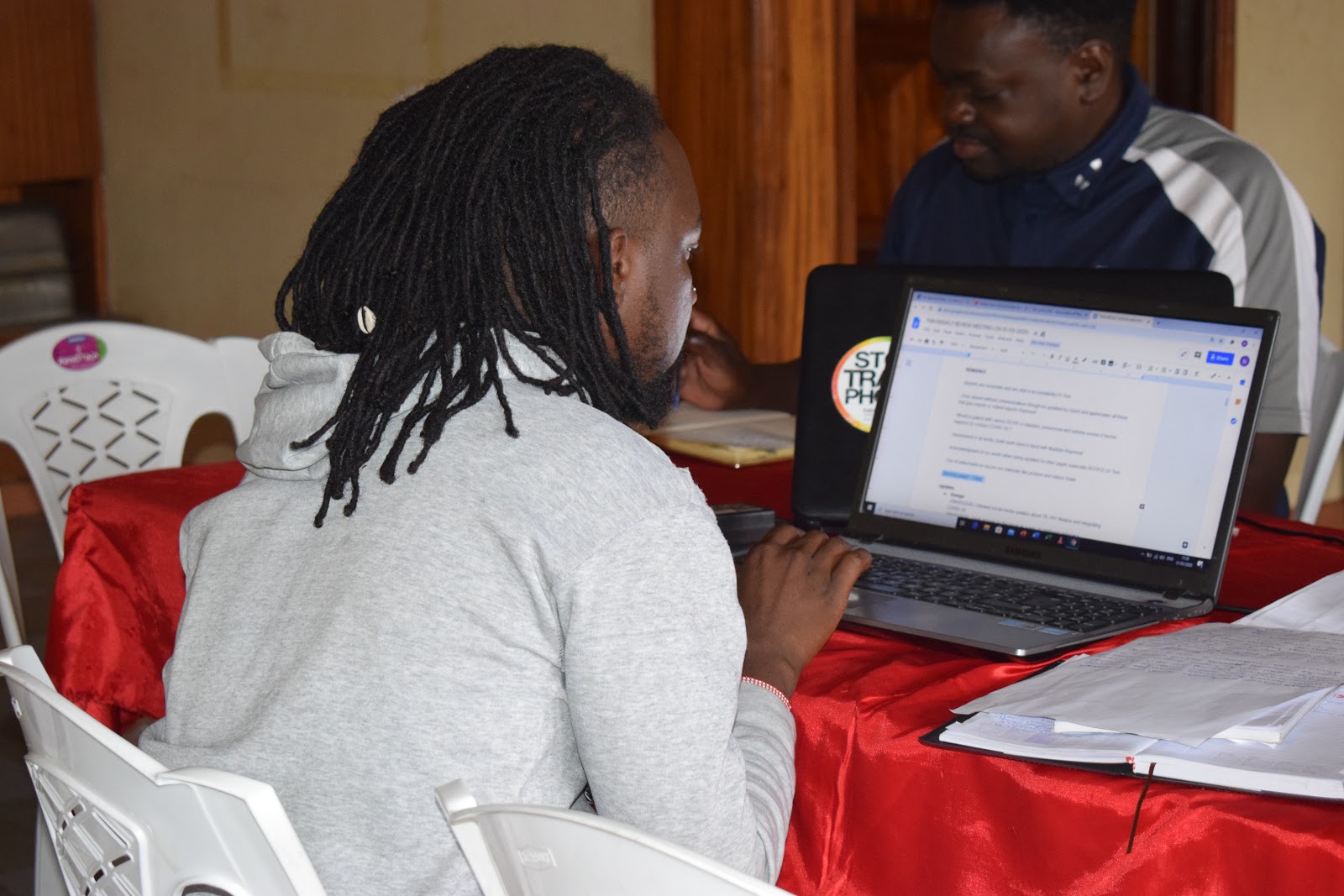
We are a Kenya -based Transgender-Led, Refugee social support safe space and we use Family-Based Therapy activities to build a context stimulating of acceptance, healing, agency, autonomy, self-belief, self-determination and self-preservation. We use this model to heal refugees who fled persecution, other forms of persecutions and abuses. We enhance continued humanization of refugees by highlighting opportunities for participation in daily activities of life through planned community activities. We promote and advocate for protection of rights and dignity of refugees irrespective of status, origins and we provide navigation services including accompanying those who have to keep their appointments at health facilities regularly. We promote tiering, linkage and referral services uptake. We have been a landmark facility and a first point of contact for many refugees since 2015. Currently, we are faced with COVID-19 Prevention protocols as laid down by the GoK. This means we have to stay home. This in turn requires that we have everything we need in place. However, we also have to put in mind the situation at our shelter. In order to address the present situation, we have devised action plans to integrate COVID-19 response.

When:

Nature Network was formally launched in 2015 but it was incubated in 2014.

What else we do:

1.    Engage in mobilization activities for refugees to attend or benefit from programmatic activities such as; awareness raising, information raising, planned activities, health education, human rights orientation, skills improvement.

2.    Provide space for dignity-affirmation and self-esteem enhancement among LGBTIQQ refugees.

3.      Engage in livelihood implementation to improve economic and skills development for LGBTIQQ refugees.


The plan:

Vision: Safety for all members

Goal: To leverage action to integrate COVID-19 response

Mission: To continue being the space for safety, security and well-being of all members

Long Term Objective: To ensure that members’ life is protected and productive

Short Term Objective: To ensure that all our activities are geared at safety, security, protection and preservation of life while continuing to engage in other productive activities as follows:
Ø       TB, HIV, Malaria Prevention Integrating COVID-19 (THIMAPIC)

Ø       Protection, Security, Safety and Rights Awareness (PASSRA)

Ø       Gender-based Violence and Prevention/TB Prevention Campaign  (GEBAVAP/TBPC)

Ø       Disability Assistance and Drug Use Rehabilitation (DADURE)

Ø       Mental Health Promotion (MEHEP)

Ø       Livelihood and Income Generation Activities’ promotion (LIGAP)


The Logic Framework

SN
Objectives
Action

Outcomes/Remarks
1
TB, HIV, Malaria Prevention and
1.
Promote Universal Testing  and
-Ensure we engage in activities that promote Universal Testing

Treatment (UTAT); as well consider following up on Social Distancing and Isolation Protocols  laid down by GoK

Eradication Integrating COVID-19
2.
The Cascades: Testing; Treatment;
and Treatment (UTAT); as well as fulfill the Social Distancing and isolation protocols in place.


Viral Suppression
-Ensure we plan for promotion of prevention programmes that


3.
Early Testing; Complete Treatment ;


Case finding for Drug Resistant TB
entrench the Cascades: Testing; Treatment; Viral Suppression, isolation and social distancing


4.
Mosquito net; Spraying; Complete
- Plan and ensure early Testing; Complete Treatment ; Case


Treatment


finding for Drug Resistant TB


-Promote Malaria Prevention through distribution of Mosquito net;


Spraying; Complete Treatment
2
Protection And Rights Awareness
1.
Personal protection, Security and
-Promote Personal protection, Security and Safety

Safety


2.
IEC Materials on COVID-19
- Plans in place and toll free numbers to call in case of emergency


3.
 Protection of life


-Plan for staying home while being occupied productively
3
UN Observances/ Gender-based Violence Prevention/Anti TB Campaigns
1.
Increase awareness on space sharing
-Encourage all to share activity plans; Identify what everyone can engage in as they pass time during lock down; draw a strategic schedule showing what everyone is doing; share this during review meetings every Tuesday
2.
Engage in productive activities


-Continue engaging in Anti-TB Campaign.


4
Disability Assistance and Drug Use
1.
Identify, Link and Follow up to
-Planned activities to Identify, Link and Follow up to ensure

ensure rehabilitation for those who need the support

Rehabilitation (DADURE)
2.
Health Talks
Rehabilitation and adherence to medication taking for those who have TB and HIV


3.
Outreaches
-Planned community Health Talks


-Planned Outreaches
5
Mental Health Promotion (MEHEP)
1.
Psychosocial Support sessions
-Planned Psychosocial sessions
2.
The planned recreation activities


3.
Mental Strengthening and upliftment
-Planned recreation activities


sessions


The Nature Network Group (TNNG) Gardening Project November 2021 to October 2022

Title:  Establishing Gardens As A Livelihood Project For Refugees November 2021 to October 2022  Introduction:  An half an acre garden can p...